








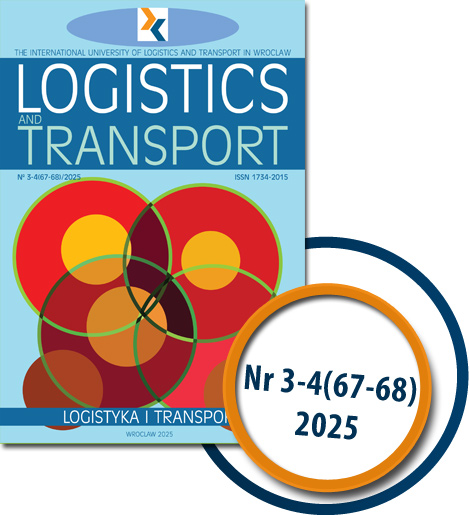
Spis artykułów:
1. "The Importance of WMS and ERP Systems in the IT Structure of an Enterprise "
Robert Kruk, Miłosz Wisłocki
The vast majority of modern logistics and/or manufacturing companies utilise two types of management solutions as their primary IT systems: WMS (Warehouse Management System) and ERP (Enterprise Resource Planning). There are several reasons for this approach, including the complementarity of key supply chain, warehouse, and internal process management functions. However, we increasingly hear about the limitations of these systems (despite their evolution) and the need to extend them with new solutions that more precisely fit into the growing needs of the market, and therefore in increasing the efficiency of enterprises in a market that is no longer limited to a specific area, but has become a global market.At the same time, it should be emphasised that according to the Grand View Research report - Warehouse Management System Market Size 2024, “the global WMS market is estimated at USD 2.88 billion in 2024, with a forecast of up to USD 8.38 billion in 2030.”
In this article, the authors try to present and justify two theses: to demonstrate the problem of low awareness of the management staff regarding the existence of other (new) solutions, and to indicate factors influencing the lack of interest in implementing new solutions.
 |
Pobierz artykuł |
2. "Achieving Sustainable Development in Logistics: a Path to Environmental and Economic Efficiency"
Karolina Wnuk
The logistics sector plays a crucial role in global trade and economic growth. However, the rapid expansion of this sector has led to significant environmental impacts, including increased greenhouse gas emissions, resource depletion, and pollution. In order to address these challenges and achieve sustainable development in logistics, a comprehensive approach is necessary that considers both environmental and economic efficiency. This article explores the concept of sustainable development in logistics and its underlying principles. It first examines the environmental challenges associated with the logistics sector, highlighting the need for reducing emissions, minimizing waste generation, and conserving resources. The economic benefits of sustainable logistics are also discussed, including cost savings through energy efficiency, improved resource management, and increased competitiveness in the global market. The aim of the article is to identify solutions that can contribute to achieving the concept of sustainable development in the context of the logistics industry. The article tries to answer the question: what solutions and strategies can be used in the logistics industry to achieve economic efficiency and reduce the impact on the environment? Overall, this article provides a comprehensive overview of the challenges and strategies for achieving sustainable development in logistics. It underscores the pivotal role of logistics in achieving sustainable development goals through environmentally friendly practices and a holistic approach to economic and environmental efficiency.
|
Pobierz artykuł |
3. "Unmanned Aerial Vehicles in Transport – A Vision of the Future or a Real Trend in Logistics Development?"
Krzysztof Patryk Czyrny
The use of unmanned aerial vehicles in logistics is shaped by the simultaneous advancement of technology, evolving legal regulations, and operational requirements. Modern UAV designs, such as the Amazon MK30 and Matternet M2, demonstrate the potential for transport applications, including advanced perception systems, autonomous navigation, and increased resilience to selected weather conditions. At the same time, the implementation of these technologies faces clear limitations resulting from restrictions on beyond-visual-line-of-sight flights, complex certification procedures, and the lack of unified international standards. Technological barriers also remain significant, including limited payload capacity, flight time, and the characteristics of currently used energy sources, as well as the need for operator oversight in situations requiring intervention. An additional challenge is the underdeveloped infrastructure necessary to integrate drones into supply chains, including networks of landing sites, charging systems, and UTM traffic-management platforms. Despite these limitations, unmanned systems are becoming an increasingly important component of modern logistics services, contributing to shorter delivery
|
Pobierz artykuł |
4. "Enterprise Management Support Systems – Comarch ERP Optima – System Structure"
Ireneusz Jędra
The article presents the characteristics and structure of the Comarch ERP Optima system along with a description of its basic modules. Its functionality and possibilities of use in managing and controlling the business activities of enterprises of various profiles are described.
|
Pobierz artykuł |
5. "Transport of Munitions in the Light of ADR"
Tomasz Borowski
This article explains the concepts of explosives and hazardous materials. It presents the legal framework governing the road transport of hazardous goods. It discusses the classification of hazardous materials, with particular emphasis on Class 1, and outlines the rules for labelling, loading, and transporting Class 1 explosives.
|
Pobierz artykuł |
6. "Storage of Explosive Materials and Their Physico-Chemical Tests After Many Years of Storage"
Piotr Milewski
This article presents a brief historical overview of the components of the munitions testing system containing various types of explosives, their specific characteristics, and describes basic concepts related to explosives. The aim of the article was to assess the basic principles of explosives storage and safe handling during laboratory testing. Standardized methods for the physicochemical properties of explosives contained in munitions are reviewed, along with an explanation of the nature of individual tests. Furthermore, the need to use multiple testing methods or examine multiple parameters for each type of explosive is emphasized in order to obtain the most detailed information about their properties, thereby providing a reliable diagnostic assessment and determining the service life of a given explosive submitted for testing.
|
Pobierz artykuł |
7. "Ammunition Exploitation System and Its Organisation in the Polish Army"
Marcin Nesterowicz
Ammunition, as a product of particular importance to national defence, is subject to special supervision during its use and production. One of the fundamental conditions it must meet during operation is its safe operation. This also involves a number of logistical processes, such as transport, storage, record-keeping, etc. This article presents an overview of ammunition use in the national defence system.
|
Pobierz artykuł |
8. "Selecting Appropriate Coaching Tools and Methods According to a Learning Style in the Context of Professional Development"
Celina Jeray
The paper explores coaching tools through the lens of the VARK model, dividing them into three groups: mental (reading/writing and auditory), visual, and kinaesthetic. It outlines selected tools within each category and examines their application in professional environments. The analysis emphasises that while tools can be combined, their effectiveness may depend on individual learning styles, which can serve as a useful guideline for selecting appropriate methods.
|
Pobierz artykuł |
9. "Blockchain and Its Place in Modern Logistics"
Robert Kruk, Miłosz Wisłocki
In an era of globalisation and dynamic changes in supply chains, blockchain technology is gaining importance as a tool for increasing transparency, security, and operational efficiency in logistics and production. This article discusses the potential of integrating blockchain with WMS (Warehouse Management System) and ERP (Enterprise Resource Planning) systems, which form the foundation of digital enterprise management. It presents the benefits of using a distributed ledger, such as process automation, product traceability, improved regulatory compliance, and information resilience in crisis situations. It also presents examples of practical implementations (e.g., TradeLens, IBM Food Trust) and the results of a management awareness survey, which indicate significant knowledge gaps and low readiness of companies to implement this technology. The article emphasises the need for education and the development of digital competencies as a prerequisite for fully utilising blockchain's potential in future logistics.
|
Pobierz artykuł |